


KPOP Sandbox: Demon Hunters
Q8Power
I went into KPOP Sandbox: Demon Hunters expecting a quick physics toy and found a game that is most enjoyable when I stop treating it like a conventional campaign. It is a free simulation game from Q8Power, built around a sandbox where I can arrange objects, set up ragdoll interactions, and turn a simple scene into a small experiment. The K-pop and demon-hunting theme gives the playground its identity, but the real attraction is the freedom to build situations rather than follow a fixed route.
That distinction matters. If you want a polished rhythm game, a deep action title, or a story-led adventure, this is probably not the right download. If you like testing strange setups, watching characters tumble through a scene, and making your own little battles, it has an appealing low-pressure loop. My overall impression is that the first sessions are easy to enjoy, while its lasting value depends heavily on whether you naturally invent challenges for yourself.
Why the first sessions are so easy to enjoy
The opening appeal comes from how quickly the game communicates its idea. I do not need a long explanation to understand the basic pleasure: place elements, create a situation, and see how the ragdoll physics respond. A character falling in an unexpected way can be more entertaining than a carefully scripted animation because the result feels discovered rather than delivered.
The sandbox format also makes short sessions work well. I can open it while waiting for something, try one arrangement, adjust it, and close the game without feeling that I have abandoned a complicated mission. That makes it more approachable than many simulation games that ask me to manage resources, learn several menus, or commit to a long progression system before the interesting part begins.
The K-pop-inspired presentation gives the experiments a recognizable setting instead of leaving the game as an anonymous physics box. The demon-hunter framing also encourages playful conflict: I can imagine a scene as a battle, a stunt, a rescue attempt, or simply a ridiculous chain reaction. I found that the best moments came when I used the theme as a prompt, not as a promise of a full narrative campaign.
Related News





One useful habit is to begin with a controlled setup rather than filling the screen immediately. I place one character, add one obstacle, and watch the movement before introducing more elements. This makes it easier to understand what caused an unexpected result. It also turns random-looking chaos into a small test: change one part, observe the difference, and then decide whether the new version is funnier or more dramatic.
The strongest early feature is the freedom to create a scene before knowing exactly how it will end. That unpredictability is the reason I kept experimenting during the first week. A conventional battle game usually tells me what success looks like. Here, success can mean producing a surprising collision, arranging a convincing confrontation, or simply making a scene that looks amusing enough to repeat.
How I used the sandbox instead of rushing through it
I got more from the game when I treated each session as a tiny creative exercise. For example, I would make a narrow area, put a character near a hazard, and then change the starting position rather than changing everything at once. This approach is especially helpful for younger players, who may enjoy the immediate visual feedback but can become overwhelmed when too many objects move simultaneously.
Gallery
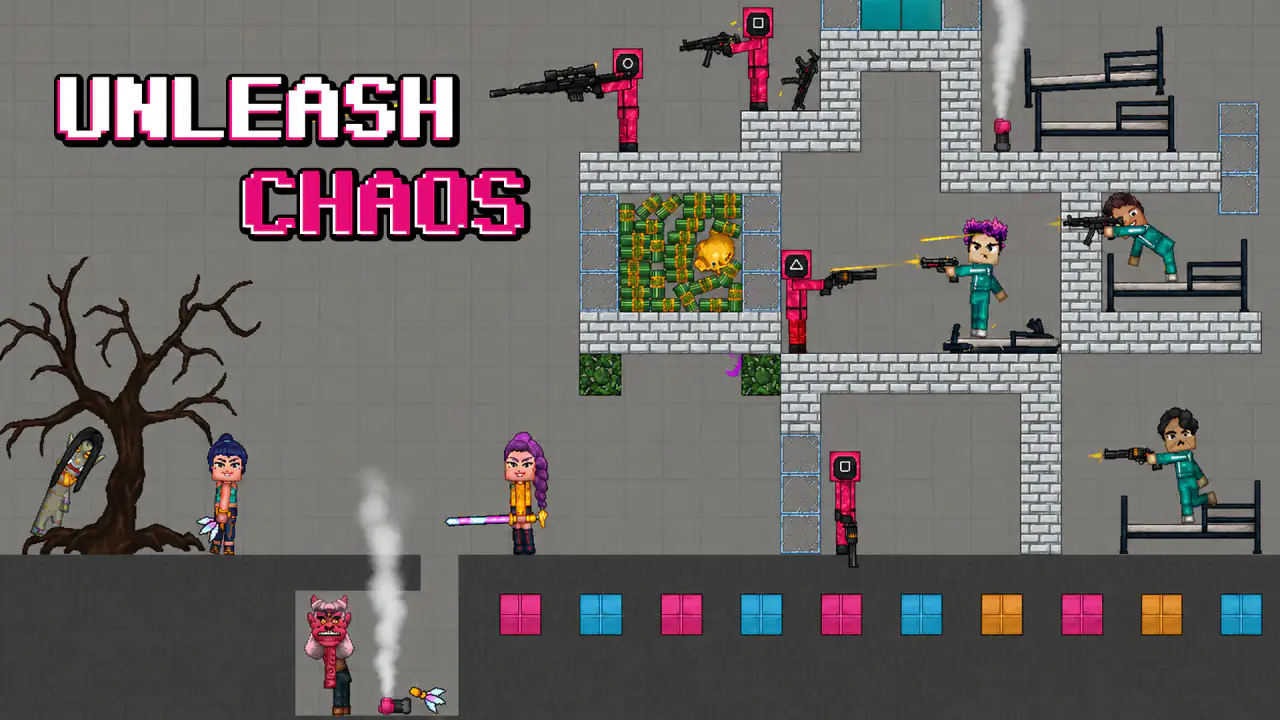
Another practical approach is to create a simple “before and after” challenge. I first build a scene that produces a predictable fall, then try to make the same character reach a different area by changing the layout. Even without a formal objective, this gives the session a purpose. It also reveals whether the physics feel satisfying to me or merely random.
The game is rated for Everyone, which fits its accessible premise. Still, accessibility in this context means the concept is easy to understand, not that every player will find the sandbox equally rewarding. Someone who wants constant goals may see the open structure as a lack of direction. Someone who enjoys making up rules will see it as room to play.
What changes after the novelty of ragdolls settles
After the initial amusement, the important question is whether the playground gives me reasons to return. In my experience, the answer is mixed. The physics can produce fresh outcomes, but the player has to supply much of the variety. There is a difference between a game generating unpredictable movement and a game offering a large set of meaningful activities. This one leans toward the former.
That is not automatically a weakness. Sandbox games often work best as creative tools, and a tool can remain useful when the player has a personal project in mind. I can return to test a new arrangement, recreate a scene I imagined, or see whether a small change produces a different chain reaction. The recurring value comes from experimentation rather than from a steadily unfolding plot.
For month-to-month use, I would recommend setting personal themes. One session might focus on building a compact arena. Another could be about making a character cross the scene without touching a particular obstacle. A third might aim for the most dramatic-looking confrontation possible. These self-imposed rules prevent the experience from collapsing into the same tap-and-watch routine.
This is also where the game compares differently with usual simulation alternatives. A management simulator generally rewards planning through money, upgrades, schedules, or long-term production. A physics sandbox rewards observation and improvisation. If I want to feel that a business, city, or household is gradually developing, I will get more lasting structure elsewhere. If I want a quick laboratory for cartoon-like movement, this format is more immediate.
It also differs from action games with fixed combat systems. In an action title, improving timing or learning enemy patterns usually creates a clear sense of mastery. Here, improvement is more about arranging better experiments and understanding how the scene behaves. That can be satisfying, but it is a quieter kind of progress and may not keep competitive players engaged.
Small workflows that make repeat sessions better
I found three workflows particularly useful. First, I kept the opening layout simple and changed only one variable at a time. That made the physics easier to read and helped me distinguish a genuinely interesting interaction from pure screen clutter.
Second, I used the theme to frame a short scenario before placing anything. “Protect this character,” “create an escape route,” or “make the encounter look like a staged music-video battle” is enough to give direction without turning the game into homework. The scenario does not need to be officially recognized by the game; it only needs to make my own session feel intentional.
Third, I stopped repeating a setup once I had already seen its best result. This sounds obvious, but physics sandboxes can tempt me to chase one more identical outcome. Moving on early preserves the sense of discovery. When I returned later, I had more fun starting from a new arrangement than trying to force an old trick to work again.
These methods reveal the central trade-off. The game offers freedom, but freedom also transfers responsibility to the player. I am not just playing the systems; I am designing the reason to use them.
Living with it over time
Maintenance is light, but creative effort is not
From a practical standpoint, the game is easy to keep available. It is free, the current version is 3.2, and it supports devices running Android 7.0 or later. Those details make it a relatively approachable option for people who do not have a recent phone. Its audience is also substantial, with over 100 thousand installs, while the average rating sits at 3.9 from around 33 ratings. I read that as a sign of modest interest rather than proof that it will suit every player.
The real maintenance burden is not technical management; it is keeping the play pattern fresh. I do not need to maintain a complicated town or remember a large collection of systems. Instead, I need to bring new ideas. If I open the game with no plan and repeat the same kind of collision, the novelty fades quickly.
That makes it a good companion app for occasional creative breaks rather than a game I would necessarily make the center of my daily routine. I can imagine keeping it installed for moments when I want something visual and interactive without a demanding commitment. I am less convinced that every player will still open it regularly after the first burst of curiosity.
For a family device, the low barrier can be useful. A child can experiment with movement without needing to understand a complex economy or a large skill tree. At the same time, an adult may need to provide the structure by suggesting a challenge, because the open sandbox does not automatically create a sequence of increasingly meaningful tasks.
Where fatigue begins
The main source of fatigue is repetition without a new question. Watching ragdolls react is entertaining when I am still learning what can happen. Once I understand the familiar outcomes, the same interaction loses force. The K-pop and demon-hunter styling helps the scenes feel more distinctive, but presentation alone cannot replace new goals.
Another possible frustration is the gap between imagined scenes and practical control. I may picture a precise battle sequence, yet physics-based movement can produce a messy result. That unpredictability is part of the charm, but it also means the game may not satisfy me when I want cinematic control. I have to accept that the system, not my exact script, gets the final word.
Screen clutter can become another issue if I add too much too quickly. A crowded setup may look exciting for a moment, but it can make it difficult to understand what happened. My solution was to build in layers and pause mentally between changes. Players who prefer immediate spectacle may enjoy the mess; players who want readable cause and effect should keep scenes more restrained.
The game may also disappoint anyone searching for a substantial story about demon hunters or a deep musical experience. Its theme is a setting for sandbox play, not a substitute for a narrative adventure or a dedicated rhythm title. I would choose a different game if character development, scripted missions, or precise beat-based interaction were my main priorities.
Who should keep it installed
I think it earns a place on a phone for players who enjoy emergent physics, casual experimentation, and making their own objectives. It is particularly suitable for short sessions, creative tinkering, and sharing a device with someone who likes watching unpredictable scenes unfold. The free price removes the need to make a large commitment before discovering whether the format works for you.
I would be more cautious for players who measure value through a long campaign, competitive ranking, or a steady stream of unlocks. The sandbox can remain interesting, but it asks for imagination and patience. If I need the game itself to provide a clear reason to return every day, a structured simulation or progression-focused title will probably be a better fit.
My most realistic everyday use case is a ten-minute break after finishing a task. I can create a small scene, test one idea, and leave before the experiment becomes repetitive. Used this way, the game feels like a playful sketchbook. Used for long stretches without changing the challenge, it is much more likely to feel like the same demonstration repeated.
My long-term verdict
KPOP Sandbox: Demon Hunters earns lasting space only when I use it as a creative playground, not as a conventional game with an endless supply of objectives. Its first-week appeal is genuine: the ragdoll physics are immediate, the theme gives experiments personality, and the free entry point makes trying it simple. The game is also friendly to casual sessions and older Android devices that meet its minimum requirement.
Over a longer period, the experience becomes a test of personal curiosity. I can keep finding value by inventing scenarios, changing layouts carefully, and treating each setup as a small experiment. Without that effort, the novelty fades because the core pleasure remains centered on watching physics produce unexpected movement.
My recommendation is therefore specific. Download it if you want a light simulation sandbox for improvised battles, visual experiments, and short creative breaks. Keep your expectations modest if you want a full story, deep progression, or precise action controls. I enjoyed the freedom, but I would not call it a universal long-term game. For the right player, though, its simplicity is exactly what makes it easy to revisit.
FAQs for KPOP Sandbox: Demon Hunters
What is KPOP Sandbox: Demon Hunters?
KPOP Sandbox: Demon Hunters is a mobile game that combines idol-themed K-pop aesthetics with supernatural combat and sandbox-style progression. Players typically build and customize a team of performers, explore demon-filled environments, collect resources, and improve their characters through upgrades. Its appeal comes from mixing music-inspired presentation, anime-like visuals, strategic battles, and light role-playing mechanics in one accessible experience.
How does the gameplay work in KPOP Sandbox: Demon Hunters?
The game generally revolves around assembling a group of heroes, completing missions, fighting demons, and using rewards to strengthen your roster. Depending on the mode, you may need to choose suitable characters, manage abilities, and plan upgrades rather than relying only on automatic combat. Exploration and collection elements add variety, while the sandbox structure gives players room to experiment with different teams and progression paths.
Is KPOP Sandbox: Demon Hunters free to download and play?
KPOP Sandbox: Demon Hunters can be downloaded without an upfront purchase when offered through its official mobile store listing. However, free-to-play games may include optional in-app purchases, such as premium currency, cosmetic items, character resources, or time-saving features. Players should review the store page and the game’s payment settings before downloading, especially if children may use the device.
Does the game require an internet connection?
An internet connection may be needed for downloading additional files, synchronizing progress, receiving events, displaying advertisements, or accessing online features. Some basic content could potentially work offline, but availability can vary by version and device. For the most reliable experience, launch the game while connected to Wi-Fi and check its permissions and store description before assuming that every feature works without internet access.
Is KPOP Sandbox: Demon Hunters suitable for all players?
The game is best suited to players who enjoy colorful K-pop-inspired characters, fantasy action, collection systems, and gradual team development. Demon battles and supernatural themes may not appeal to very young children or users who prefer realistic or completely casual games. Before installing, parents should check the official age rating, advertising content, in-app purchase options, and device requirements for their region.
Pros
- Creative sandbox gameplay inspired by K-pop and demon-hunting themes.
- Character customization adds personality to your demon-hunting team.
- Short missions make it easy to play during quick breaks.
- Colorful visuals and flashy effects suit the supernatural setting.
- Collectible elements give completion-focused players extra goals.
Cons
- Progress may feel repetitive once familiar mission types start repeating.
- Some upgrades can require considerable grinding to unlock.
- The busy visual effects may make smaller screens harder to read.
- Performance may vary on older phones during action-heavy scenes.
- The niche theme may not appeal to players unfamiliar with K-pop.


